Buying guide
2.0L vs 2.5L Mazda CX-50: Why the 2.5L Engine Suits Desert & Rough-Road Markets
By EVtoU Export DeskPublished Updated 6 min read
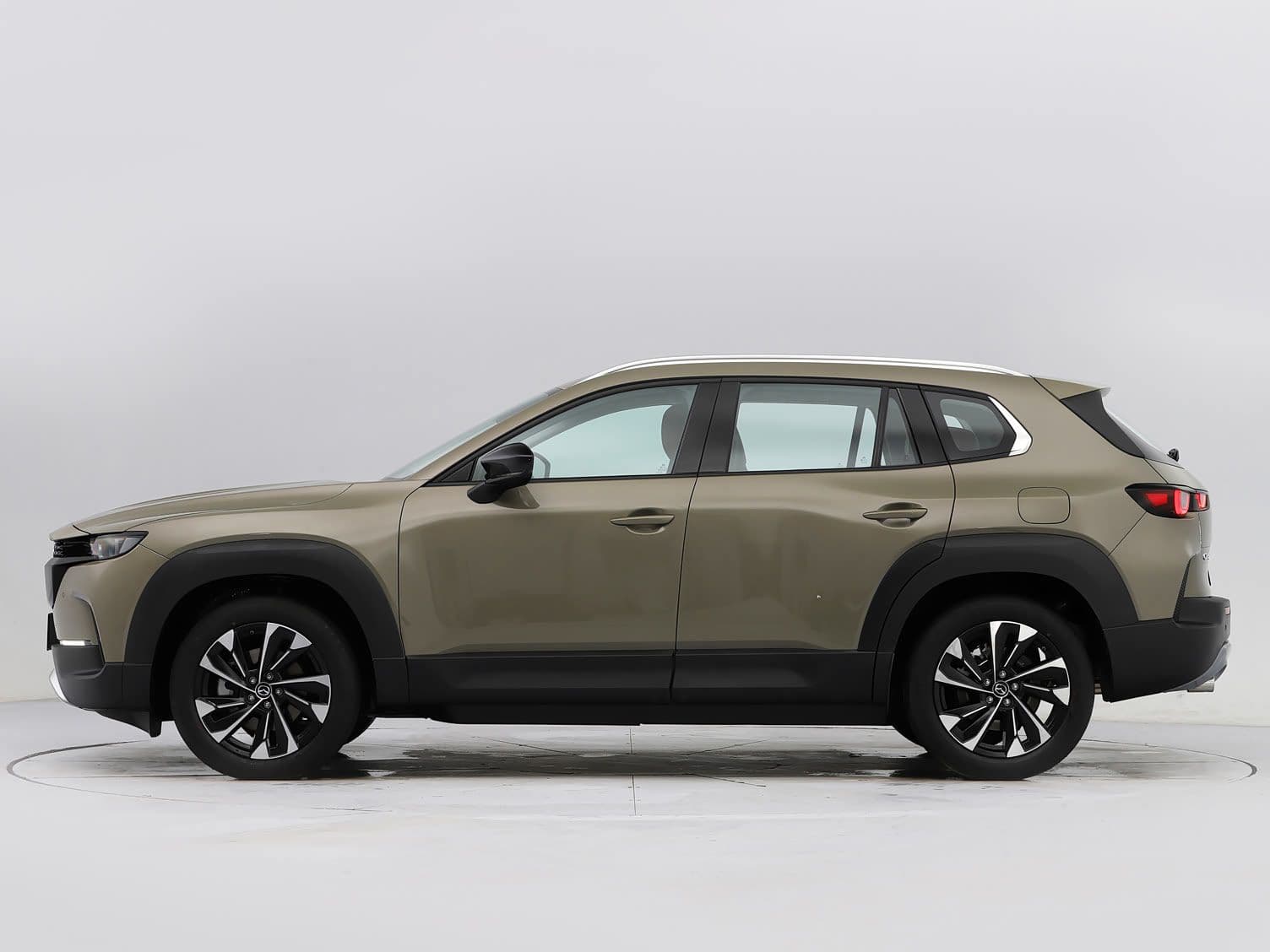
Short answer: for markets with high temperatures, long highway runs, loaded vehicles or unpaved roads, the 2.5L CX-50 is the better buy. It delivers 250 N·m of torque against 200 N·m for the 2.0L, and the fuel penalty in official WLTC testing is only 0.15–0.20 L/100 km.
How do the two engines compare on paper?
| 2.0L (PE) | 2.5L (PY) | |
|---|---|---|
| Displacement | 1,998 cc | 2,488 cc |
| Max power | 114 kW (155 PS) at 6,000 rpm | 138 kW (188 PS) at 6,000 rpm |
| Max torque | 200 N·m at 4,000 rpm | 250 N·m at 4,000 rpm |
| Engine technology | Dual S-VT, variable oil pump | Cylinder deactivation, S-HLA |
| Top speed | 183 km/h | 190 km/h |
| Fuel use (WLTC) | 7.20 L/100 km | 7.35–7.40 L/100 km |
| Curb weight | 1,609 kg | 1,660–1,680 kg |
| Fuel grade | RON 92 | RON 92 |
Both are naturally aspirated four-cylinder direct-injection engines with a 13:1 compression ratio, aluminium block and head, and a 6-speed automatic gearbox. WLTC is the test cycle defined by the UN's Worldwide harmonised Light vehicles Test Procedure; real-world figures in hot climates with air conditioning running will be higher for both engines.
Why does torque matter more than power in the desert?
In hot regions the air is less dense, so naturally aspirated engines lose some output, while the air-conditioning compressor takes more of what is left. Add five passengers, luggage and long climbs, and the engine spends more time working hard.
The 2.5L's extra 50 N·m — 25% more — is available at the same 4,000 rpm, which means the car can hold speed with less downshifting. Its weight is only 51–71 kg higher than the 2.0L, so the power-to-weight advantage stays large: roughly 83 kW per tonne against 71 kW per tonne.
What about fuel cost?
Official WLTC figures show a difference of 0.15 L/100 km between the 2.0L and the 2.5L Touring. Over 30,000 km a year that is about 45 litres. The 2.5L's cylinder deactivation helps at cruising speed by running on two cylinders when demand is low.
If fuel cost is the main concern — for example in taxi or ride-hailing use — the bigger saving comes from the CX-50 Hybrid at 5.10–5.56 L/100 km, not from the smaller petrol engine.
Is the CX-50 suitable for rough roads?
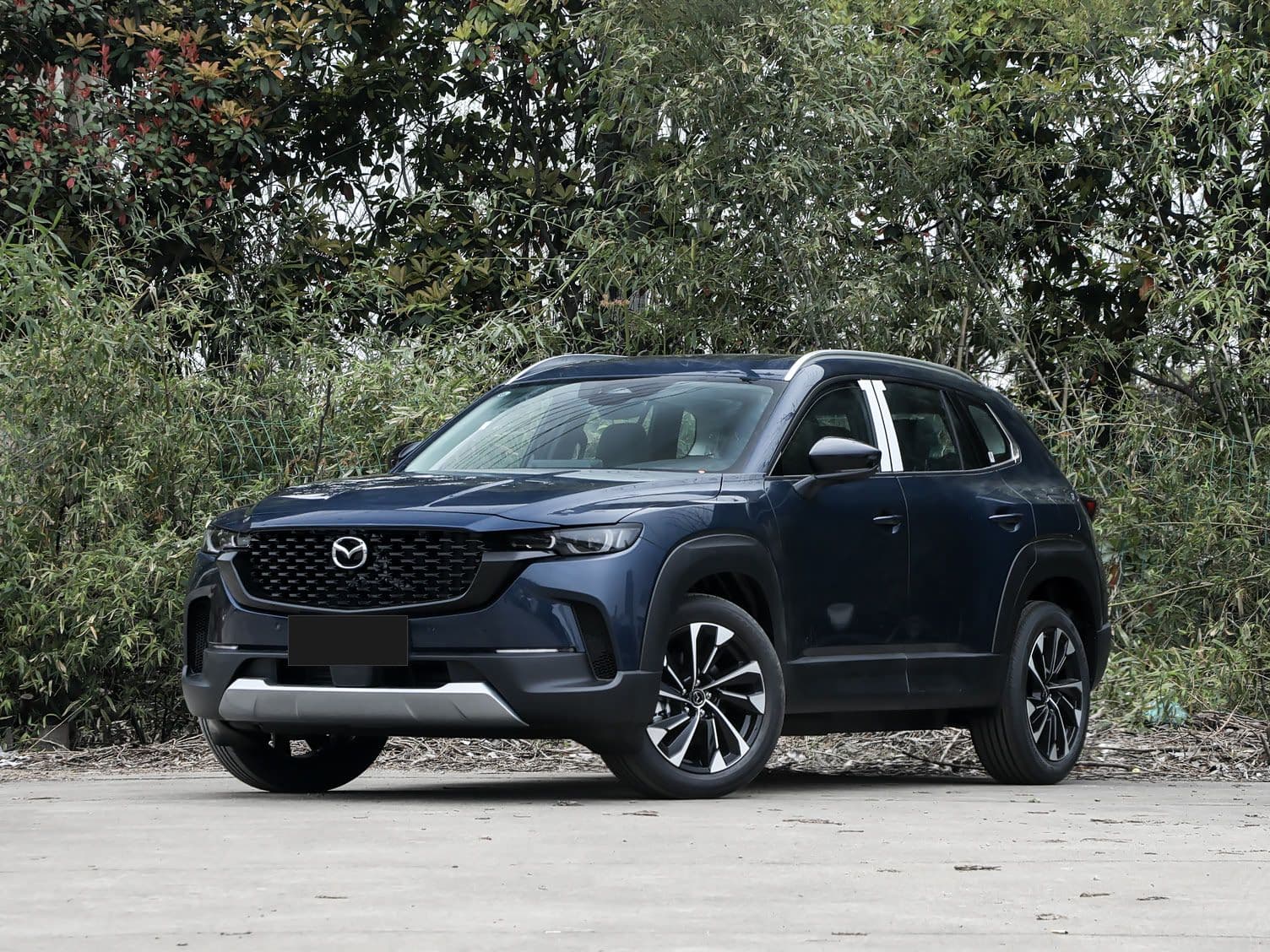
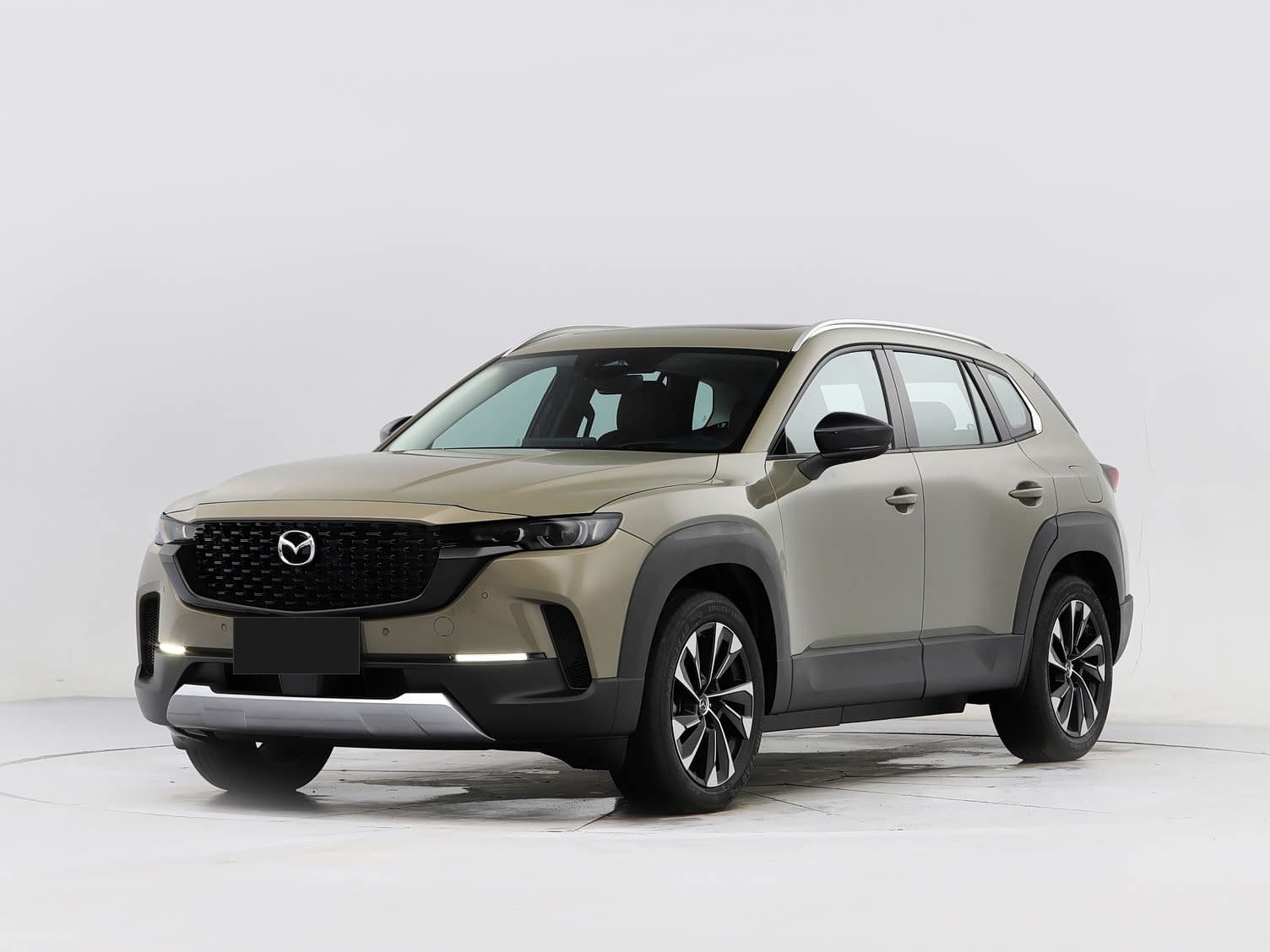
The CX-50 is a road-focused compact SUV, not a body-on-frame off-roader, but it is built for mixed surfaces. The manufacturer lists a 17° approach angle and 22° departure angle, and the 17-inch trims run on 225/65 R17 tyres with a taller sidewall that copes better with gravel and potholes than the 19-inch option.
All petrol CX-50s in China are front-wheel drive. Buyers who need traction on sand or snow should look at the Hybrid AWD trims, which add a 40 kW rear motor and an off-road drive mode.
When does the 2.0L make sense?
- City fleets with short trips and light loads
- Markets where duties or registration fees rise with engine size
- Price-led showroom offers where a lower entry price drives traffic
Our recommendation
For the Gulf, Central Asia and other hot or rough-road markets, stock mainly 2.5L units: the 2026 2.5L Touring or Premium, the 2024 2.5L Touring or the 2023 2.5L trims. Add a small number of 2.0L cars only if your price list needs an entry model.
EVtoU Export Desk — Export sales and logistics team at EVtoU, Beijing.